
What to do in Madeira in January
I won’t lie. January is not the best time of the year to come to Madeira. After the big Christmas and New Year’s Eve extravangaza, the island stays on a joyful spirit until Three King’s Day (January 6th). Afterward, the pearl of the Atlantic stays dormant as people recover from the holidays. I dare say it’s the only time of the year people retreat to their homes: January and February are the coldest months on the island, and there can’t be fireworks every day.
The party spirit only starts to reawaken for Carnaval (late Feb), and then flowers start to bloom, the mountains are lush, and the whole joy thrill ride picks up again. That’s not to say there are no tourists in January. While it’s a slower season, you’ll still find plenty of tourists on popular spots like Pico do Areeiro, Ponta de S. Lourenço, Levada dos Balcões and Cabo Girão, just to name a few. But the crowd that comes with the holidays is gone, and you can discover the island at your own pace.
However, that’s only a good idea if your plans are flexible. You can’t plan a strict one-week plan thinking you’ll hike somewhere on Tuesday and another place on Wednesday. While the weather is still pretty pleasant (minimum temperatures in Funchal rarely drop below 14ºC), there are rainy days and landslides that may make driving in Madeira’s rural roads a challenge – or staight-down impossible. Plus, temperatures in the mountains can drop considerably, even reaching 0ºC.
As for the sea, it tends to be on the rougher side until March - April. While local pools remain open, they sometimes close if the ocean is choppy. The ferry to Porto Santo goes under maintenance and the sea connection between the two island is lost. Therefore, you may not be able to dive, go dolphin or whale-watching, or make other sea-driven activities. January is a month when you stay firmly on land.
So here are my suggestions of what you should do in Madeira in January.
Enjoy the Three King’s Day Traditions
If you’re on the island during the first week of the year, this are the last of the Christmas traditions. On Three King’s Day, people using go around sing carols (there’s also a show on January 5th, at 19:00, on the Municipal Garden) and listeners usually give carol singers sweets. It’s also traditional to eat Bolo Rei (a sweet bread with candied fruits) and visit the lapinhas (Nativity Scenes).
Plus, the Christmas Market and the lights will also be on until January 6th, so you can still get some of that holiday experience!
Go to Festa de Santo Amaro in Santa Cruz for a Local Experience
The coveted ‘first arraial of the year’ goes to Santa Cruz. From January 12 to January 15th, the town celebrates Santo Amaro. According to Catholic tradition, Amarus the Pilgrim sailed across the Atlantic to earthly paradise (Madeira? Who knows.) January 15h was traditionally the day people would ‘clean up’ and store their nativity scenes and Christmas décor.
As with ever other arraial (there’s no translation for this; it’s a local festival or fair), there will be concerts, food, a mass, and events organised by the city council. Apart from people singing despique (think diss folk songs that owe nothing to rap battles, accompanied by an accordion and people singing out tune), arraiais are the best place to have hot, out of the slab bolo do caco and poncha.
Visit the Poncha and Honey Fair in Serra D’Água
Coming towards the end of the month? Then you have he “Mostra da Poncha e do Mel” from January 24th -26h in Serra d’Água. Serra d’Água is a parish in Ribeira Brava, that you cross on your own from Ribeira Brava to São Vicente. It’s also home – and probably best known for – the best poncha on the island.
Poncha is a traditional Madeiran cocktail. In Serra d’Água, it’s made with local lemon or orange fruit juice, aguardente de cana (similar to rum), honey and sugar. Bee honey also comes from local producers, so you can taste all the local produce in one sweet-yet-boozy drink. To make it even more traditional, have your poncha with a side of peanuts or seasoned lupins.
Hike at Ponta de S. Lourenço Without crowds
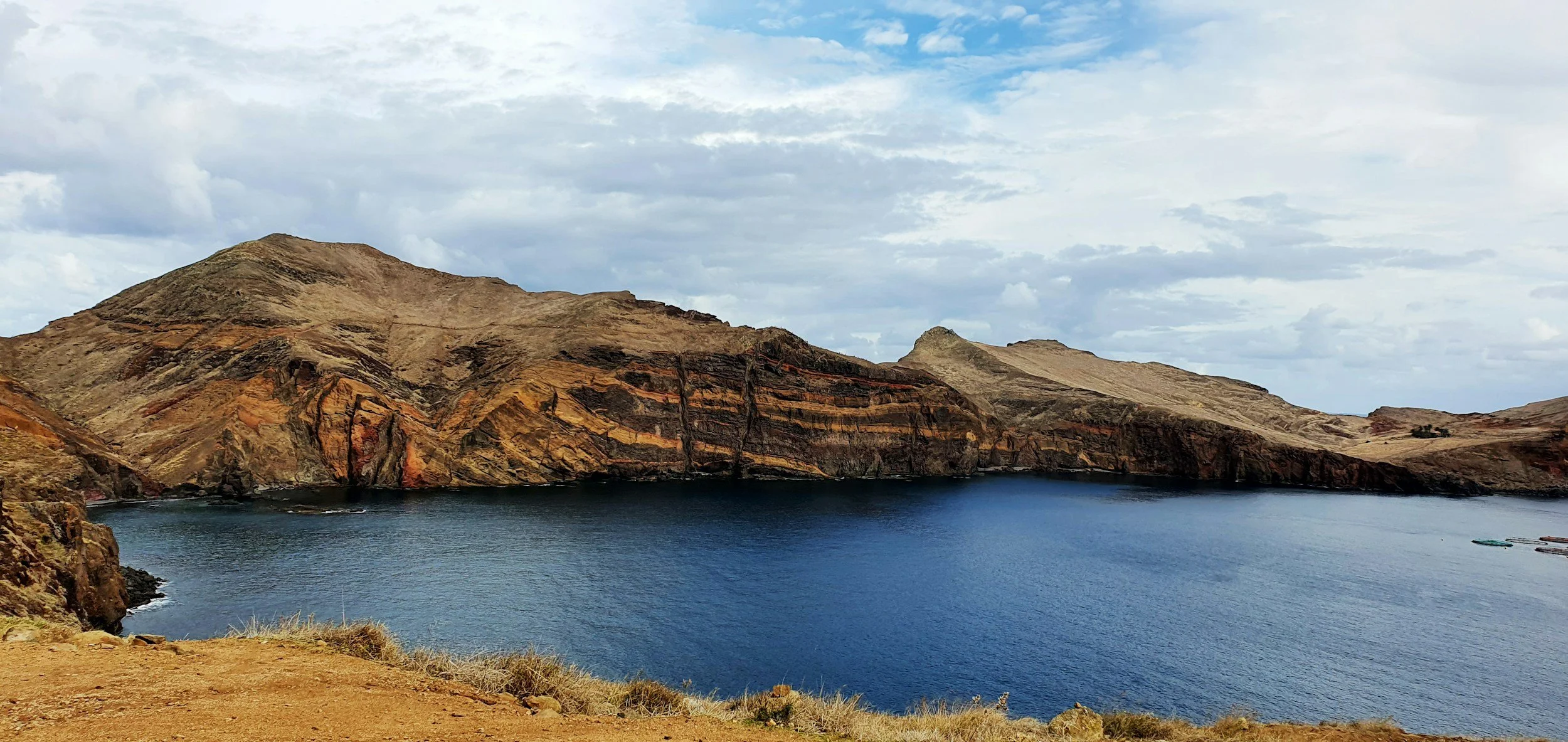
A lot of people come to Madeira to hike and enjoy nature. However, at this time of the year, some trails will be closed during storms and the terrain itself tends to be slippery. This is why, in January, I would prioritise the hike at Ponta de S. Lourenço, the eastern-most tip. It’s the driest part of the island, almost desert-like, and akin to the landscape in Porto Santo.
Now, Ponta de S. Lourenço gets very muddy when it rains. So, before heading over there, I’d check the webcam at Caniçal to make sure the weather is nice. If it is, the hike takes about 3 hours to complete and it will take you to a Martian-like landscape, only surrounded by sea. You can either drive there or take a bus to Baía d’Abra. Although it’s usually hard to find a parking space there, it should be easier at this time of the year.
Head to Levada dos Balcões, Levada do Risco and Levada do Alecrim
If you insist on hiking a levada, then stick to the safer ones. Levada dos Balcões is a short, 30-min levada that ends at a beautiful viewpoint. Most importantly, it’s a flat levada, so it’s safe even if the weather hasn’t been the best. Plus, you may enjoy the road to Ribeiro Frio. Even from the car (or the bus), you still get to see a little bit of the stunning Laurissilva forest and towering trees.
Elsewhere on the island, you head to Calheta and try some of the easiest and most popular levadas on the West Coast. If picking just one, Levada do Risco is only 1.5 km long and takes 2 hours to complete. At the end, there’s a well-known waterfall. If the weather is sunny and you want to make a longer levada, Levada das 25 Fontes starts at the same spot and takes 4 hours to complete. This is a medium difficulty levada, for hikers who feel more confident. (If you’re starting to get in trouble, like the New York Time’s correspondent, stick to the Levada do Risco route.)
Finally, also in Calheta, you have another easy levada, Levada do Alecrim. These are the four routes going inland that you’re more likely to complete at this time of the year. Do check the official website for updates and figure out which trails are opened or closed.
Enjoy citrus fruits, cherimoyas, and guavas
Everybody who comes to Madeira wants to try different tropical fruits. And they’re not wrong to do so. But if you’re coming in January, a lot of them are bound to be imported. I always tell visitors they should look for what’s in season, because that’s what’s going to be ripe from the tree, juicy and ready to savour. Madeira bananas are in season all year, and you may be able to find some local cultivars as well, like apple banana.
Apart from the bananas, I’d urge you to try cherimoyas (also known as custard apples) and guavas, which continue to appear all through the month. Citrus fruits are also in season, including oranges, lemons and tangerines. Local tangerines, which are slightly acidic, are eaten copiously around Christmas time. And it’s a great snack to cut through the fat from carne de vinha d’alhos and the garlic butter!
Have a plan B for rainy days, Always
What to do in Madeira on rainy days? This is the question people keep asking. In fact, my blog post about what to do in Madeira on rainy days is one of the most visited pages on my website. I urge you to look around and figure out what you’d like to do: a food tour? Afternoon tea? A bolo do caco workshop? Visit a museum? See how rum for poncha is made?
There is more than one Madeira. Sure, you may want to hike and walk around, but that’s not always possible. If that’s the case, take the opportunity to deep dive into local culture. Even if you’ve visited mainland Portugal before, I guarantee you Madeirans do it differently!
Final verdict about January in Madeira
If you’re okay with a flexible plan and just “going with the flow”, then January a good time to come to Madeira. You’ll find cheaper accommodation, cheaper rent-a-cars, and great viewpoints pretty much all to yourself at this time of the year.