
15 Tropical Fruits of Madeira, Ranked
These are all the tropical fruits you must try in Madeira, ranked:
1. Madeira Bananas
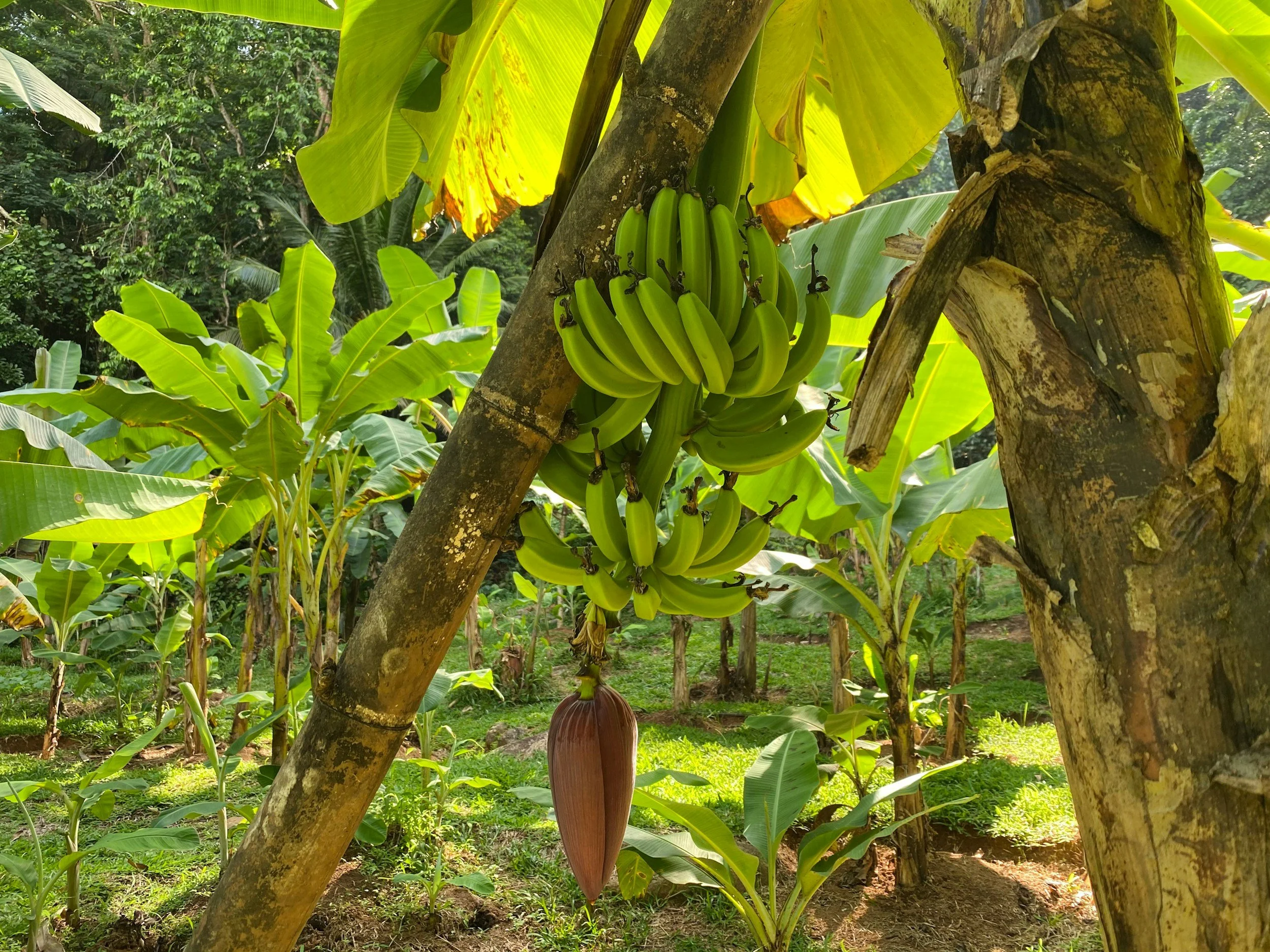
When it comes to fruits in Madeira, banana is queen. Despite their small size, Madeira bananas are the island’s biggest export. Apart from the size, which is smaller than what you’re used to, Madeira bananas are known to be especially sweet. When they’re ripe, it almost feels like a little banana-caramel forms as you bite or cut through it.
The first written mention of banana trees on the island is from 1552, probably from Cape Verde or the Canary Islands, and initially it was only used a decorative tree – what a waste, right? It was only in the 19th century that bananas surpassed sugar and wine as the island’s main produce.
Vereda do Nateiro, in Madalena do Mar, takes roughly 20 minutes to complete and takes you around local farms. Plus, if you’re really into it, there’s also the Banana Museum in Lugar de Baixo. The visit to Vereda do Nateiro is something I recommend for a relaxing day on my one week in Madeira guide.
2. Apple Bananas
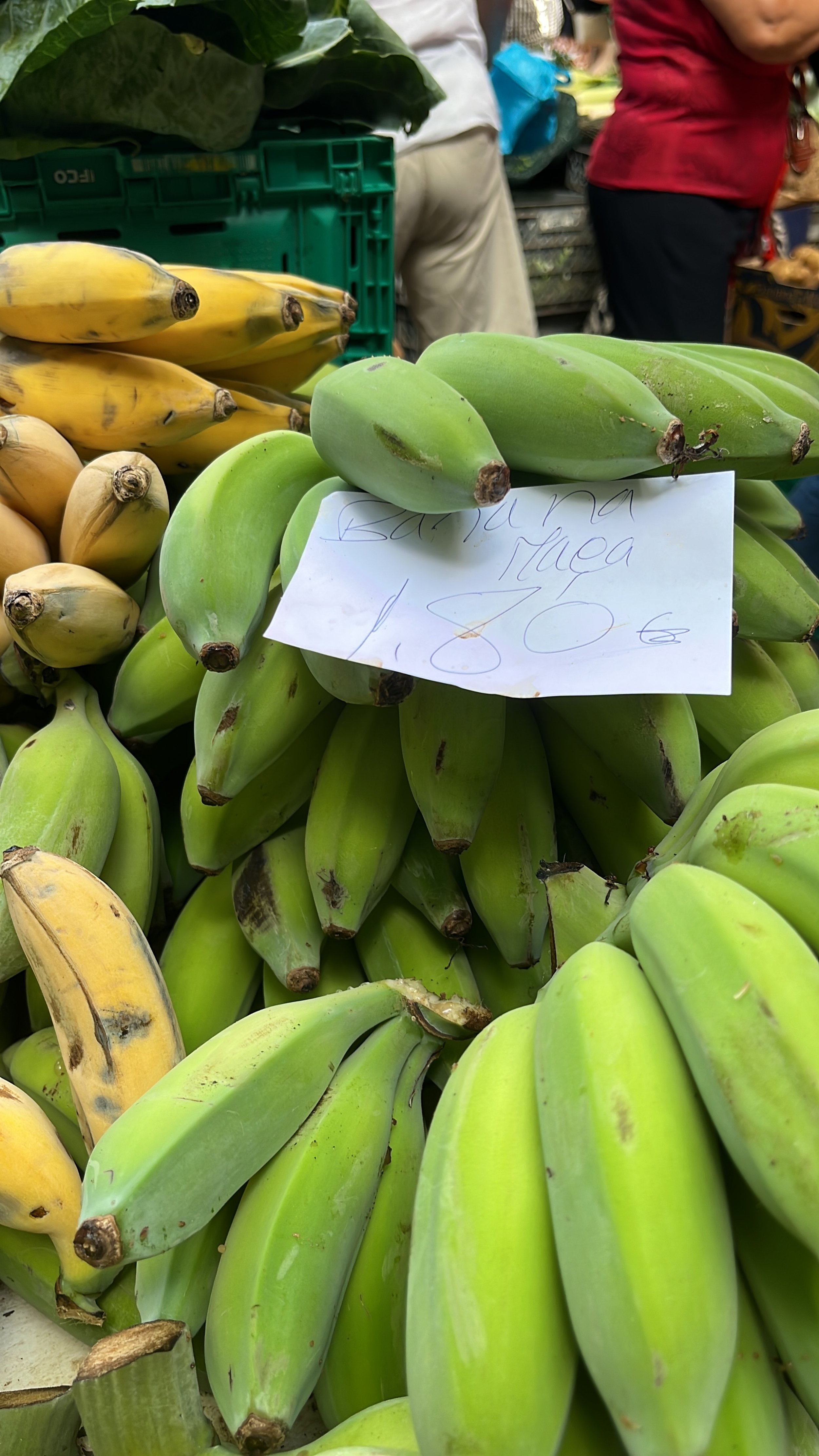
Regular Madeira bananas are similar to the bananas from South America (although, as explained, sweeter than what you get at the supermarket). However, those are not the only bananas you’ll find. Grown mostly for domestic purposes, there are other kinds of banana you may find at the Farmer’s Market on Fridays and Saturdays.
One of those bananas are apple bananas. You tell they’re different as they are slightly more block-shaped and have a squarish tip. Inside, they’re a paler yellow and the flavour is more acidic than that of regular Cavendish cultivars. Since you can only find these in Southeast Asia and in some parts of Brazil, I’d definitely take the chance to have one here.
3. Cherimoya
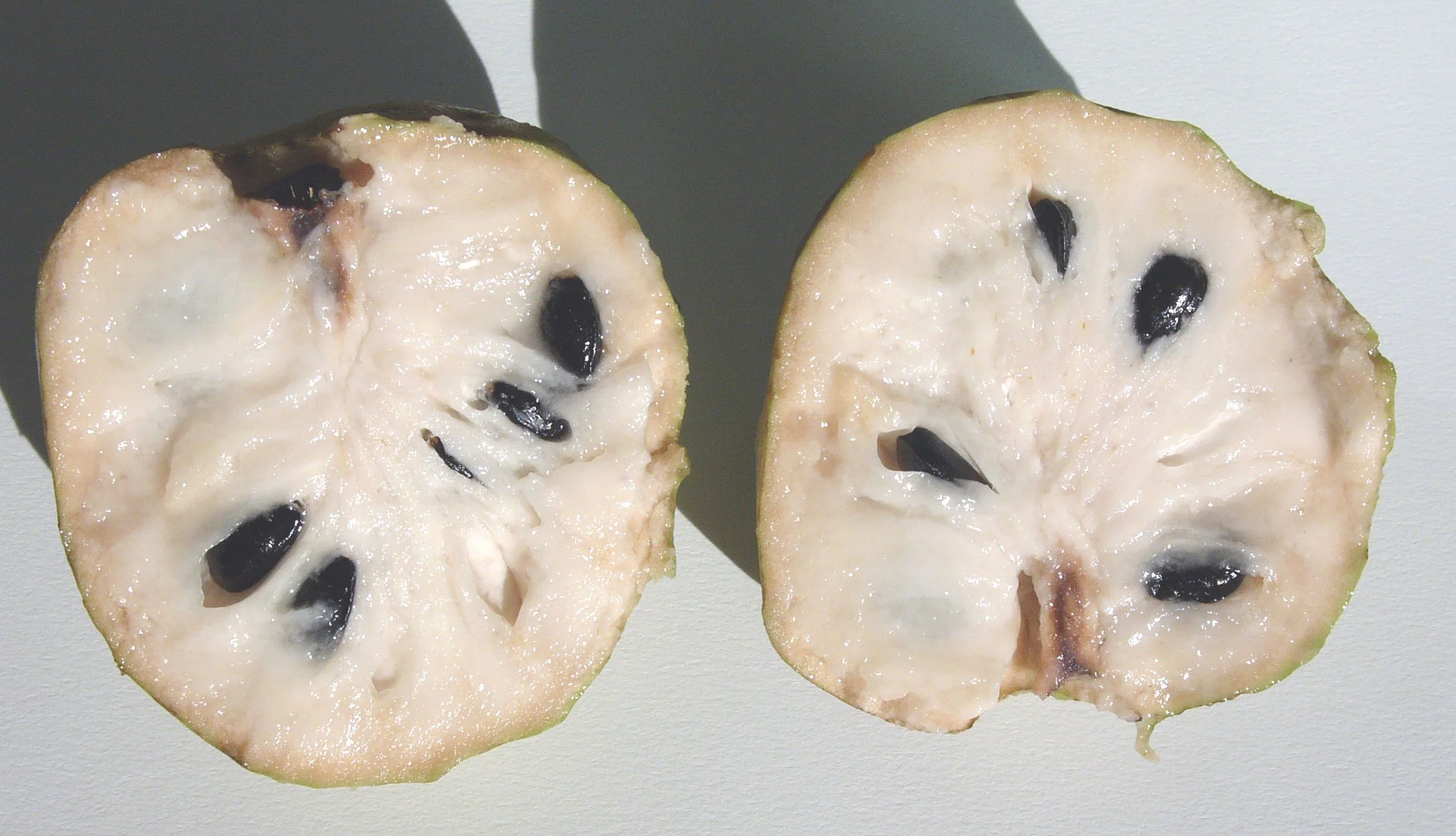
I placed bananas first because, in Madeira, they’re iconic. However, if it were up to me, cherimoyas are where it’s at. Cherimoya (anona, in Portuguese), also called “custard apple” (I think they’re close relatives) is a soft, creamy, tropical surprise, with notes of banana, pineapple and, some say, papaya.
Before coming to Madeira, I’d tried supermarket cherimoyas and I had read they were a treat the Incas offered to Gods. But I never understood the appeal. It was not until I came here and tried them when they’re in season – December through February is a great time to have them – that I could appreciate the tropical aroma and complex flavour they carry.
4. Passion Fruit
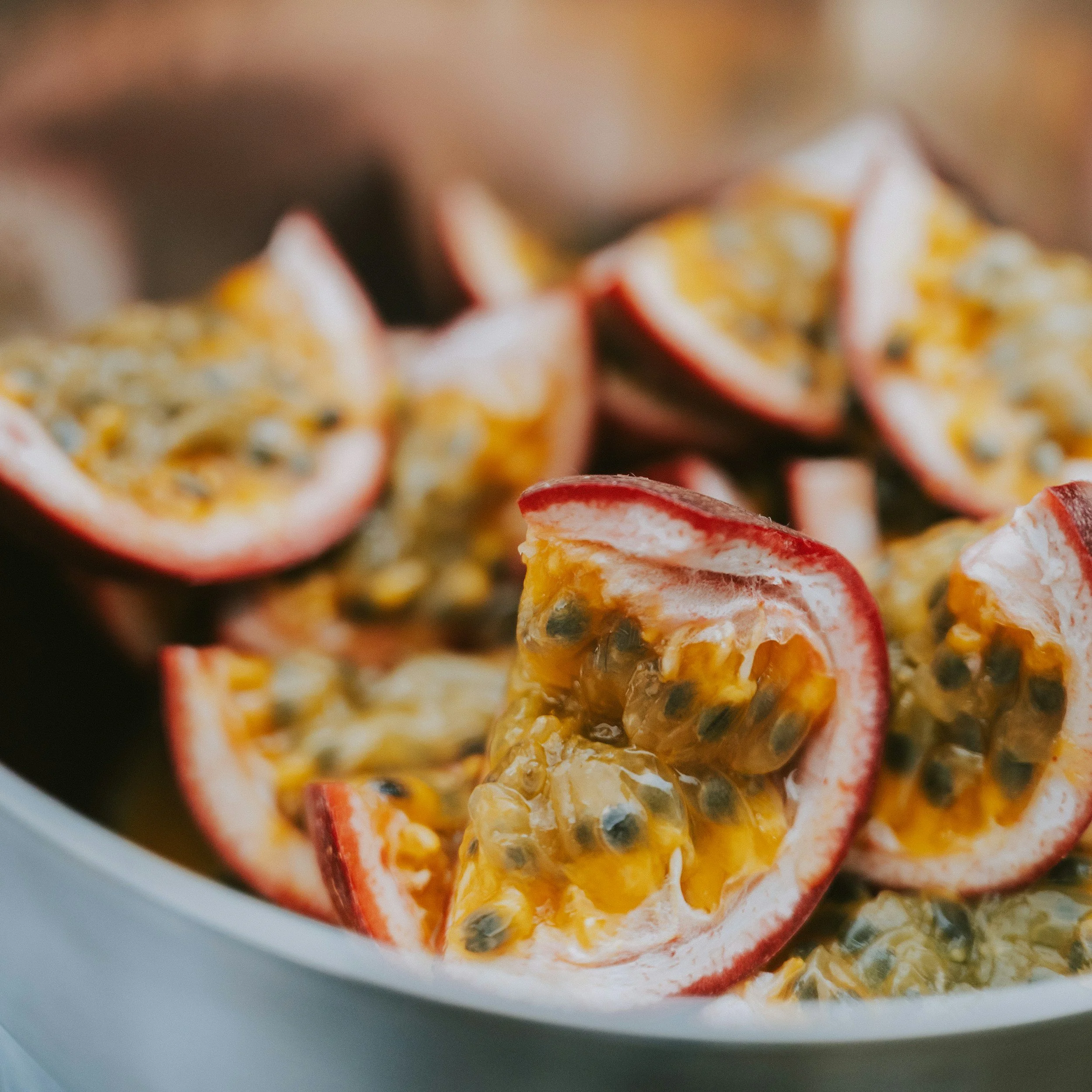
Passion fruit (maracujá) is dear to Madeirans. Like bananas, there are several cultivars. The most common is purple passion fruit, but there is also yellow passion fruit brought from Brazil. Passion fruit is also the flavour of Madeira’s favourite soda, Brisa, which was the “world’s first passion fruit soda” and the perfect non-alcoholic pairing for a Madeiran picado.
While passion fruit may not be much of a surprise, how many times have you had it just taken from the tree? And what’s more refreshing on an warm August day? Away from Madeira, there’s nothing that brings me back quite like passion-fruit, passion fruit ice-cream or passion fruit juice on a hot, sunny afternoon. Here, you can find them in their prime from August through October.
5. Granadilla
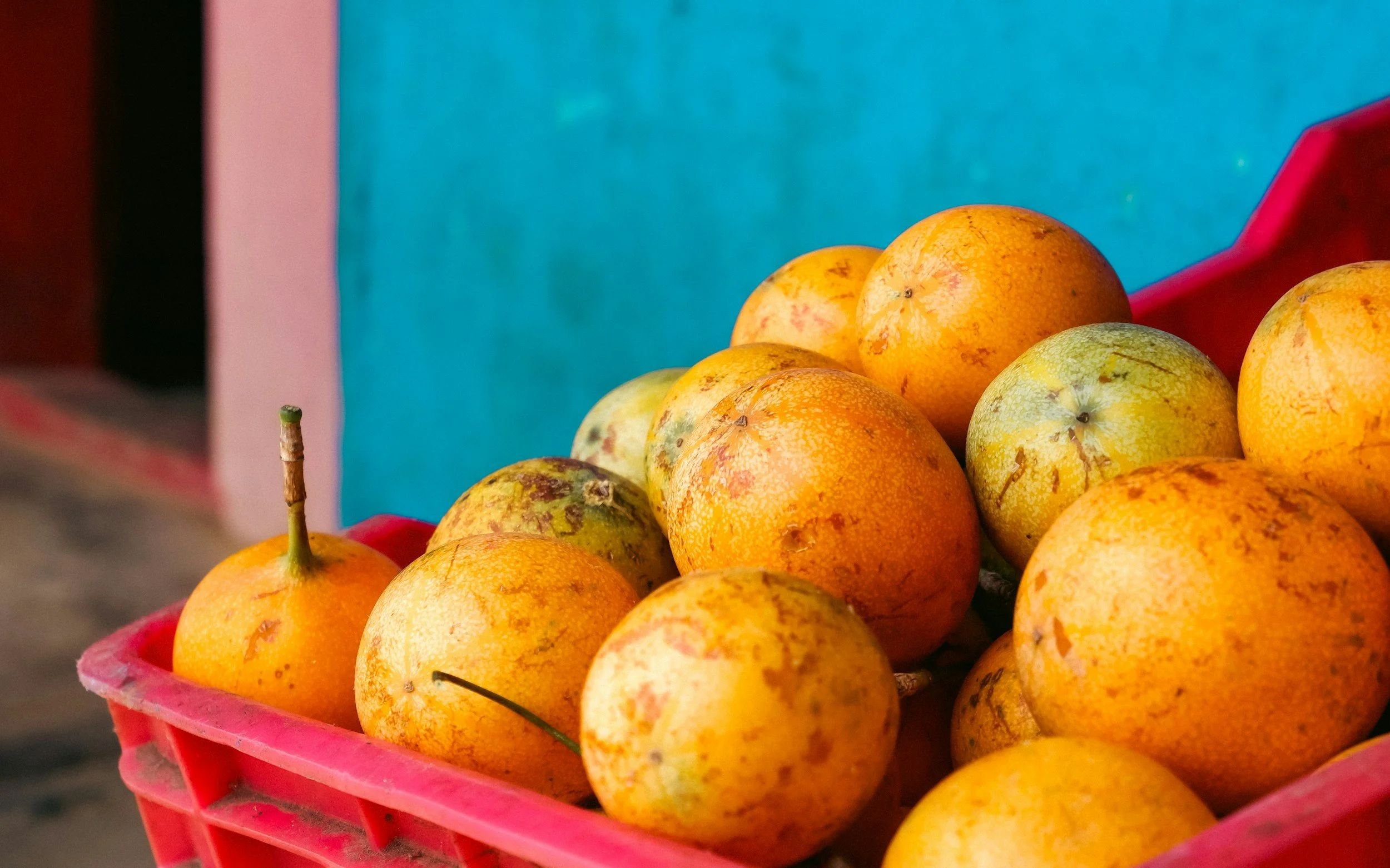
Okay, you may have had passion fruit, but have you ever tried its cousin, granadilla? Also called “maracujá limão” (lemon passion fruit), this passion fruit is more acidic – the Portuguese name is not a misnomer, because you can really feel some lemony notes – and, I dare say, more flowery. It’s my favourite type of passion fruit, and it’s not very well-known outside of South America.
Because of its rarity, vendors at the Farmer’s Market often sell granadilla from Colombia and other Latin American countries. However, from mid-Spring until Autumn, you may be able to find some Madeira-grown granadillas. They’ll be smaller and more orange than imported ones (which are yellow-ish, because they’re not ripe yet when they’re taken from the tree). Plus, no stickers!
6. Pink Guava
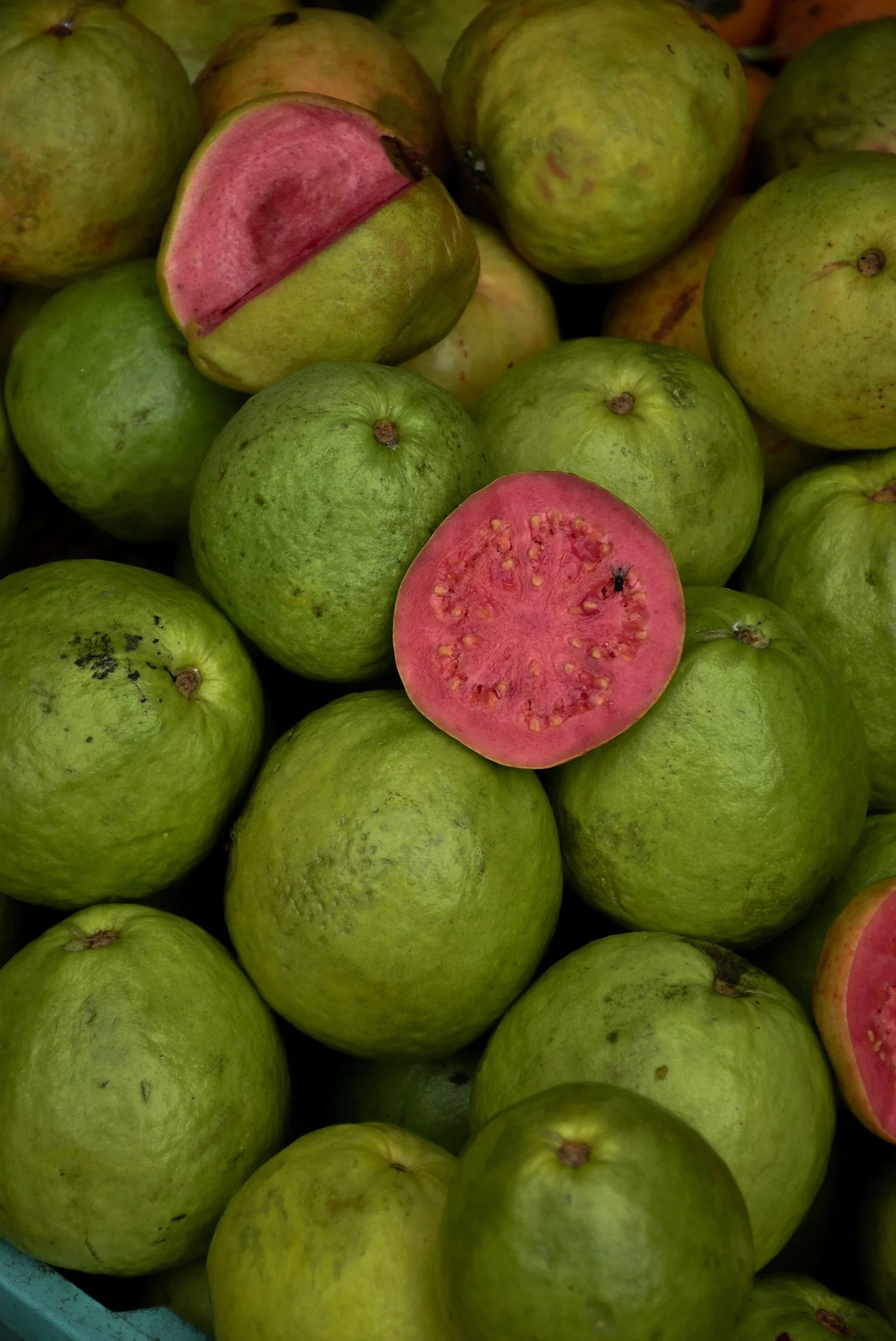
Guava (goiaba) is another tropical fruit in Madeira brought over from Central America. It’s grown mostly on the South coast, around Funchal and Câmara de Lobos, and it’s consumed raw or in jams. If you’ve never tried it, the flavour is unequivocally tropical but also cozy and relatable, with hints of strawberry and pear.
The strong floral aroma will lead you right to them. You can find them from late-October through early February, both at the Farmer’s Market in Funchal (Fridays and Saturdays) or at Santo de Serra (Saturdays and Sundays). Occasionally, you can also buy them from street vendors at Fernão Ornelas or in front of the Plaza Madeira shopping centre.
7. Strawberry Guava
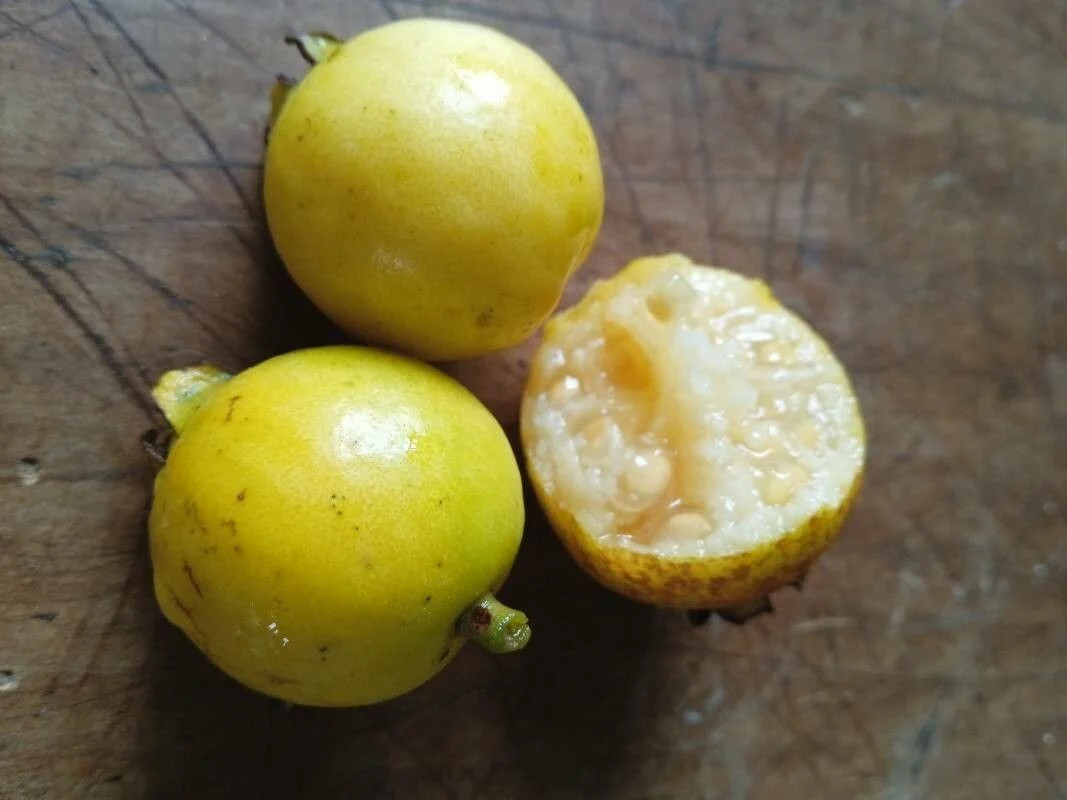
Strawberry guava (araçá) is, non surprisingly, a cousin of regular guavas. But strawberry guavas are smaller, less aromatic, and more acidic, although they can turn impossibly sweet and creamy when ripe. There are two varieties, yellow and red, yellow being the most common and tastier, in my opinion.
I like them green for a day at the beach, and ripe for an ice-cream. The production is small so they’re tough to find. When they’re in season, around Autumn, you can find some vendors by the beach in Machico. Very rarely, I’ve also seen small baskets for sale in small shops around the Farmer’s Market. Then, they quietly go away as Winter sets.
8. Tamarillo
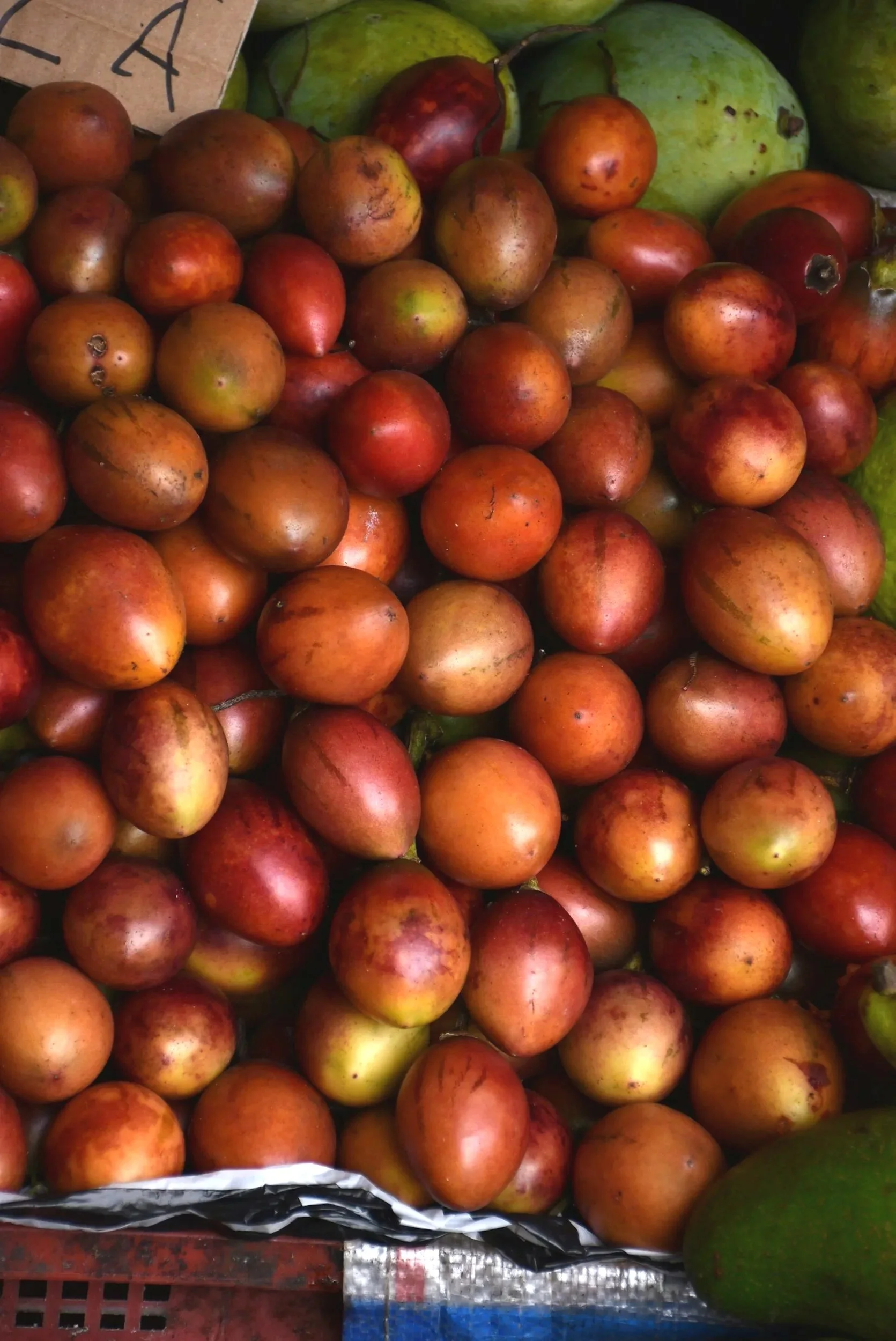
Tamarillo (known as “tomate inglês” or “maracujá tomate” in Portuguese) looks like a red passion fruit. But it’s not. In fact, it’s a part of the nightshade family, along with tomatoes, potatoes, eggplant and peppers. The flavour is sour and sweet, perfect for chutneys, jams or even salads.
Like cherimoya and guavas, tamarillo is a fruit that brightens Winter days. Even if you don’t love them on their own, don’t waste the opportunity to try them in December and January. If you like the flavour, Casa de Santo António has a great tamarillo jam (doce de tomate inglês) you can take as a souvenir.
9. Banana passionfruit
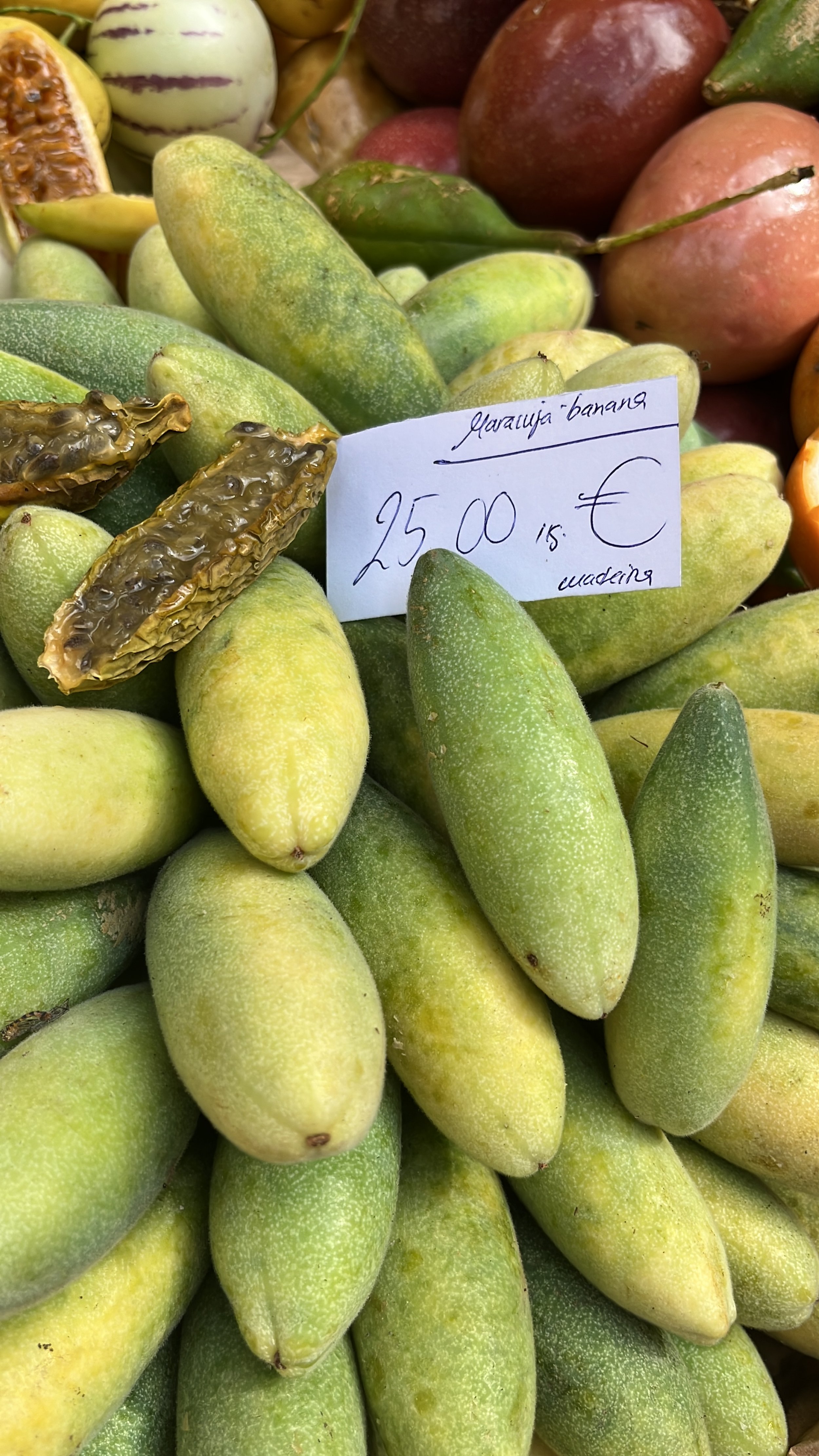
Could we join banana and passion fruit into one fruit? Sure, why not? Banana passion fruit (Maracujá Banana) looks like a small, finger-sized banana, but it’s full of passion fruit seeds inside. The flavour is very close to that of regular passion fruit, albeit sweeter (I guess that’s the banana part) and tangier.
Banana passionfruit hails from Colombia and was introduced to the island in 1914. It’s one of the Madeira fruits you can find all year around, but it’s more common from July to October. Prices vary widely; you can find very, very expensive banana passionfruit on regular market days. However, on Fridays, you can find banana passionfruit from 6€ (very, very ripe, but if you’re buying just one to try, it’s okay) to 25€ (as shown on the pic). So, look around!
10. Prickly Pear
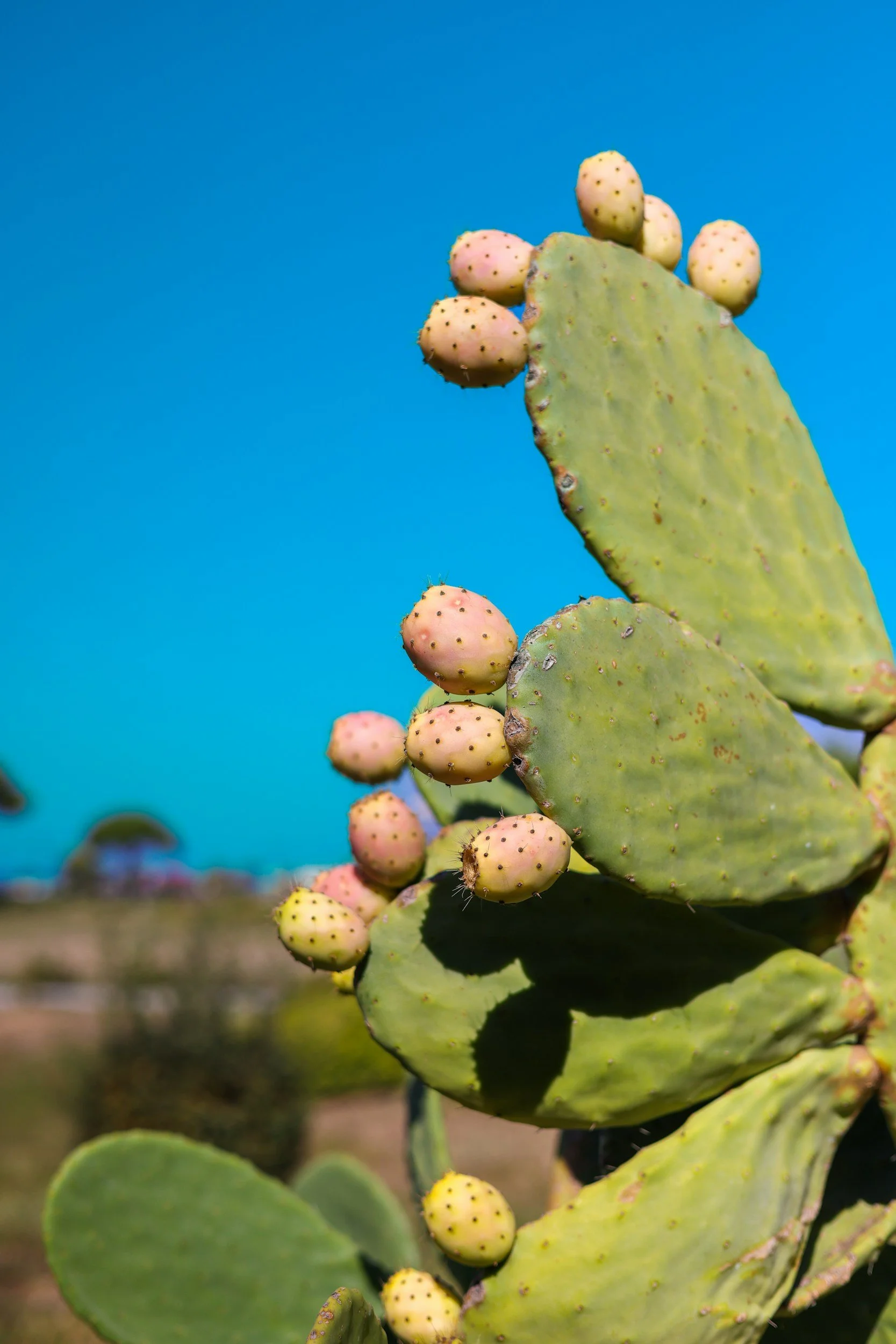
Prickly pear or Indian fig (tabaibo) is a late-Summer fruit from cacti. Although there are many prickly pears in Madeira, it’s even more common in Porto Santo. The flavour is subtle and the texture is watery, almost like melon, although it has hints of pear. (Hence the name, I guess.)
When they’re in season, you can find them at pretty much every fruit stall. If you’re just strolling around and don’t know how to eat it, ask the vendors if they can peel them for you. The folks at the stall at the beginning of Rua Fernão Ornelas/ Largo do Phelps do this free of charge, and you can try the fruit without worrying about those pirckly surprises.
11. Surinam Cherry
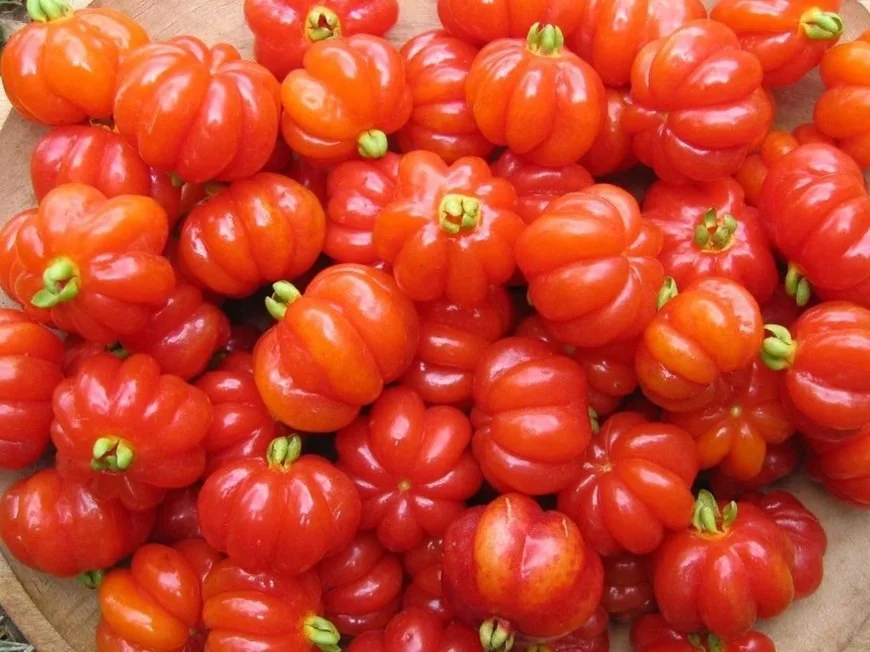
Surinam cherry (pitanga) is not a fruit that travels well. Because of this, it’s not well-known outside of Brazil, French Guyana, parts of Uruguay and Madeira. To be honest, it’s not a flavour that pleases every one. You either love it or hate it. But how can you know if you’ve never tried it?
You can find pitangas at several times of the year. They’re easier to find from October through February, but I’ve also seen them pop up in April again. My advice is to buy a small box (about a dozen of them) and see for yourself if you like the flavour. If you do, you can also find pitanga ice-cream.
12. Pepino Melon
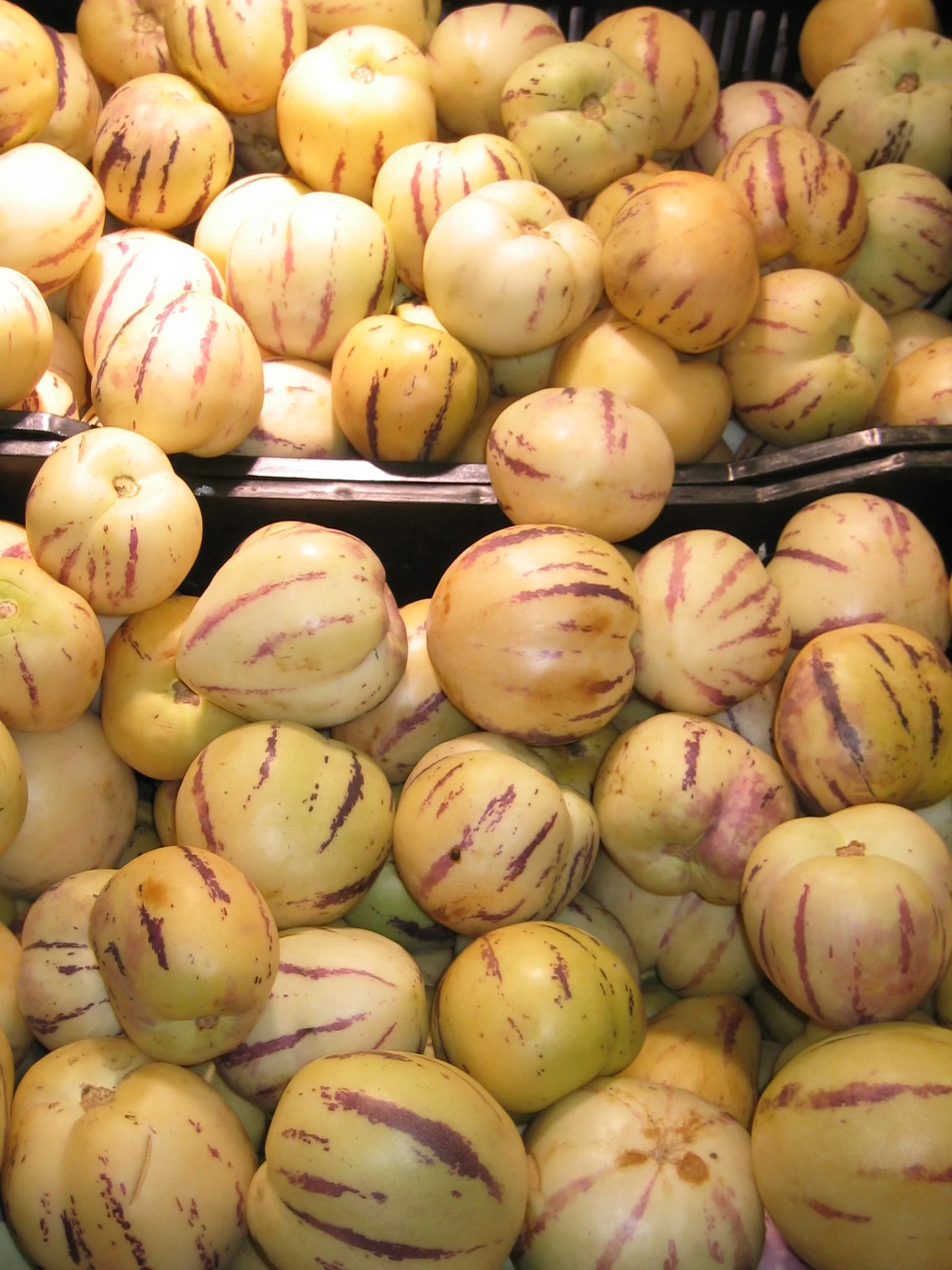
Pepino melon (“melão da terra”, in Portuguese) is another tropical fruit from South America you may not have tried elsewhere. Personally, I don’t love it. However, I’d urge you to try it and taste it for yourself. You can find them from July and September, and they’re not expensive.
13. Mango
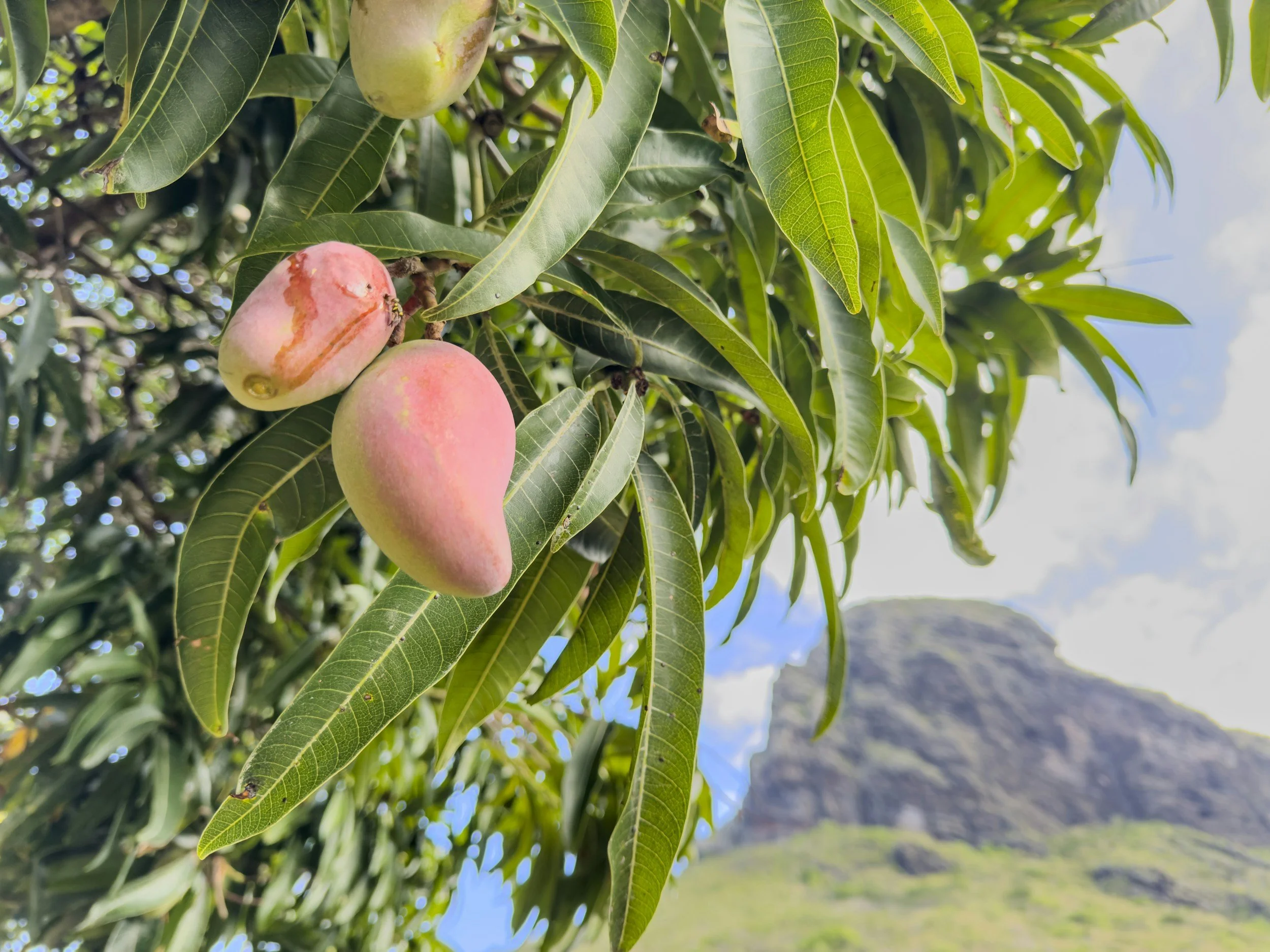
Mango is one of my favourite fruits, so I’m only placing it this low because I assume you’ve already tried it. In Madeira, you can find a smaller variety of mangos in the Summertime. Then, come Autumn, you’ll find regular-sized mangos in October, November, and December.
14. Papaya
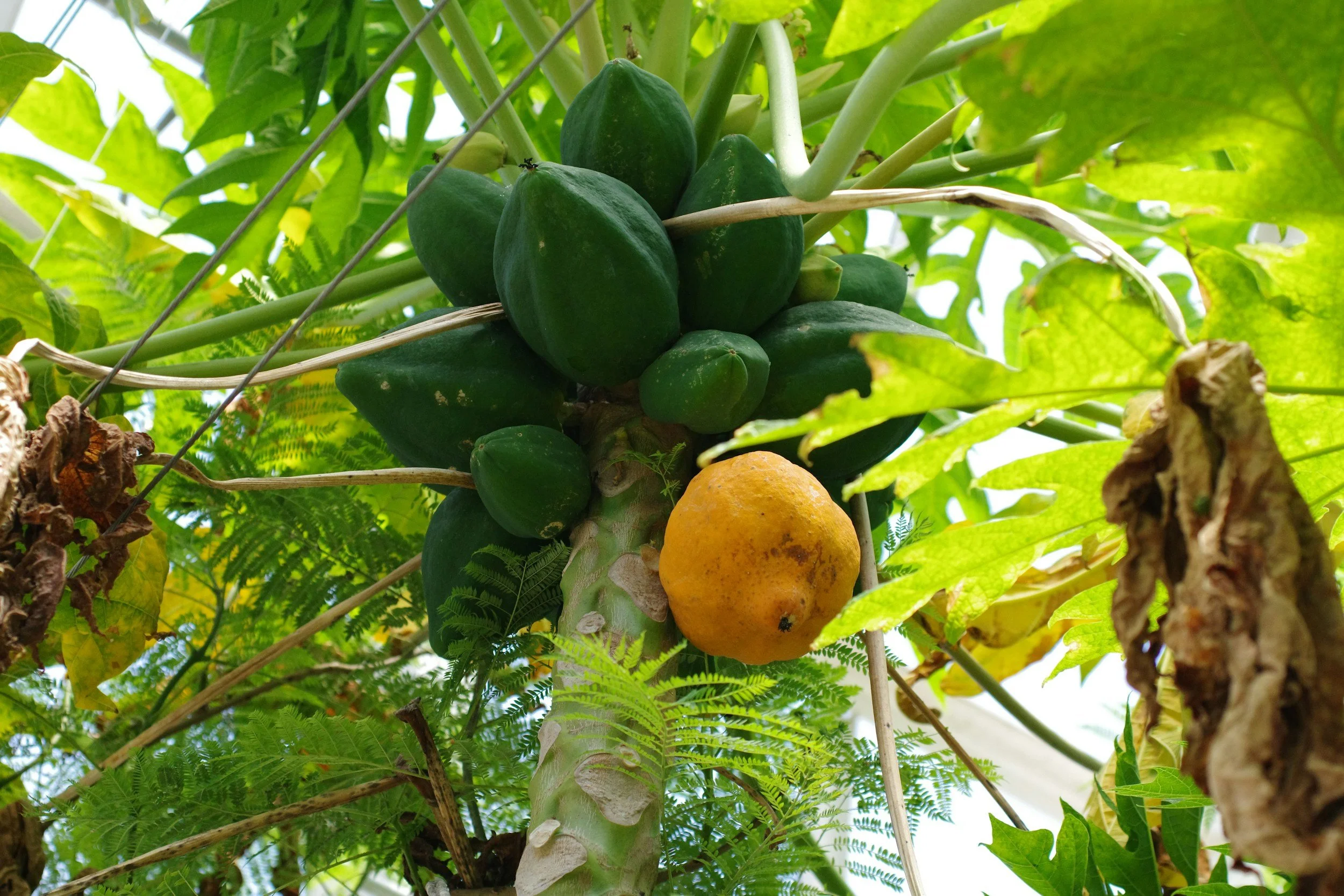
Like mango, papaya is such a common fruit that it won’t be a novelty. The only novelty here is the sheer size of papayas – they’re about 5x times bigger than I used to see on supermarkets. You can find them from May through September.
15. “Banana-Pineapple” (Monstera Deliciosa Fruit)
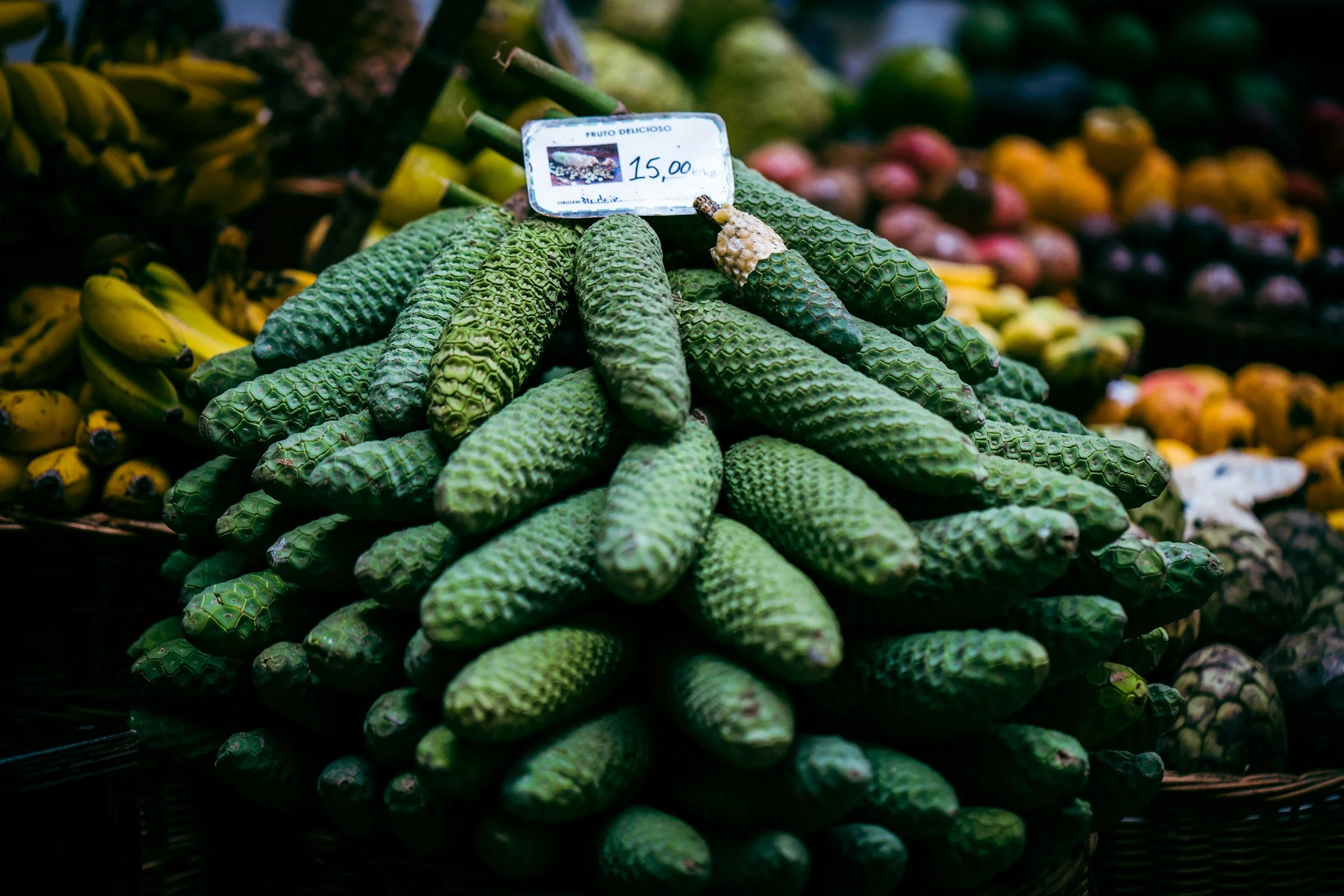
Finally, the fruit from monstera deliciosa. This fruit looks and tastes like a combo of banana pineapple, and it was one of favourite fruits when I first came here. However, to be safe to consume, it must be very ripe. You can’t eat it all in one sitting; you need to wait for parts of the peel to shed and eat it little by little.
A few years ago, this used to be very expensive (like 20€ a piece). However, if you look around, you can find vendors on Fridays and Saturdays selling them for 5€ a piece, both at the market and on the surrounding streets.